The Real Pain of Building Worlds
AI video makes shots easy. The hard part is holding the world together. What making RE/START taught me about character consistency, the edit, and why world building is continuity under pressure.
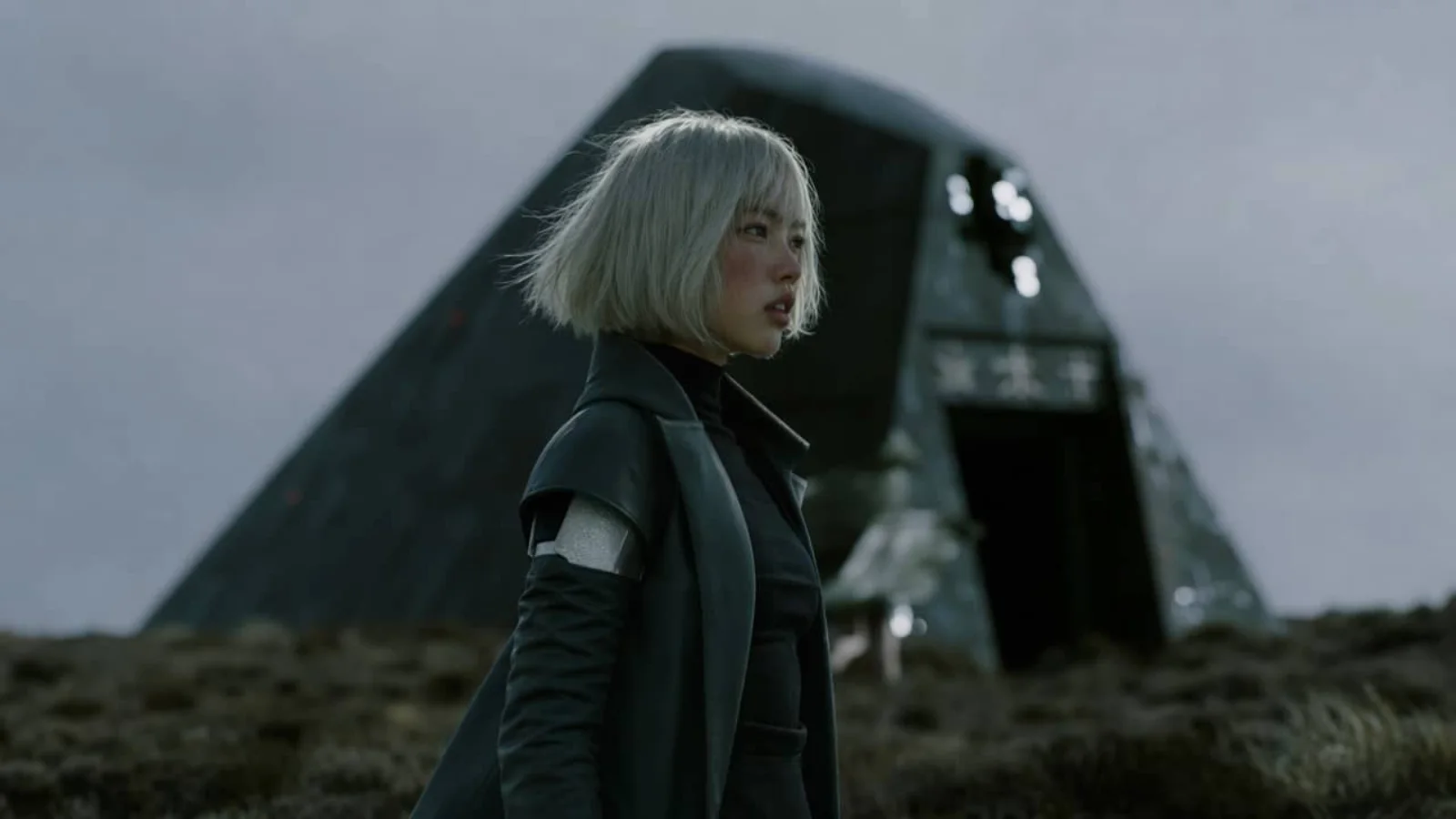
AI video has reached the point where a weak idea can look expensive.
That is the trap.
The new models are getting very good at giving you the surface of cinema. Camera movement. Light. Effects. Faces. Texture. Motion. Multishot! The feeling that something "real" was shot with a budget, a crew, and a long post-production pipeline.
But video has a cruel property that single images do not have.
The edit exposes everything.
A single image can survive as mood. One beautiful frame can imply a whole world without ever having to prove that world works. The viewer does the missing work for you. They imagine the scene before and after. They forgive inconsistency because there is nothing else to compare it against.
Video gives you no such protection.
The second shot judges the first.
The third shot judges both.
The cut reveals whether the world is being directed or merely assembled.
That was the real test behind RE/START, the short film I made for Runway's Big Pitch Contest.
At the time I checked, it was sitting around 38K views on X, with 37 replies, 149 likes, and 36 bookmarks.
Useful signal, but the number is not the interesting part.
The interesting part is what people reacted to.
One person called out the world-building directly.
Another said they wanted to see more of "this world, these characters."
Someone else described the hook back to me as "identity erasure, mission compulsion, isolated clones."
Robert Scoble said it was the first time he forgot he was watching an AI-created piece of media. That is the signal I care about.
Not "nice model." Not "cool render." Not "what prompt did you use?"
Characters. World. Atmosphere. Story pressure.
That is the line AI video has to cross if it wants to become something more than a demo reel. The tools can now give you shots.
They cannot automatically give you a reason to care about the next shot. That part still has to be directed.
For RE/START, the premise was simple:
She doesn't know who she is. She always completes the mission. She has never met the others.
That is enough to create a pressure system. Identity, repetition, obedience, isolation. You do not need to explain the whole mythology. You need enough tension for the viewer to feel that a mythology exists.
This is where a lot of AI video breaks.
The shots are beautiful, but nothing is under pressure.
A woman walks through rain. A robot looks at a city. A soldier turns toward camera. A spaceship lands in fog. All of it can look incredible now.
But if the character does not want anything, if the world does not push back, if the edit does not create a question, the piece evaporates the moment it ends. That was what I wanted to avoid.
I did not want RE/START to feel like a sequence of outputs. I wanted it to feel like a pilot for a show that does not exist yet. Something with characters you could follow, rules you could uncover, and a final beat that makes you feel there is more behind the door.
The hardest part was not generating cool shots.
The hardest part was holding the decisions together.
Character consistency is still one of the ugliest problems in generative video. I wrote more about that here.
That post ended up doing around 17.5K impressions and 273 bookmarks, which makes sense because this is where people hit the wall. The practical answer was not a perfect prompt.
For RE/START, I started with older character ideas, built node systems to generate 100+ character sheets, pushed them through Midjourney, then brought the results into Runway and Seedance. In the replies I clarified that it was not just Midjourney. I used Nano Banana and GPT Image on top of it.
Sometimes uploading the character sheet or a really good starting frame directly into Seedance was enough.
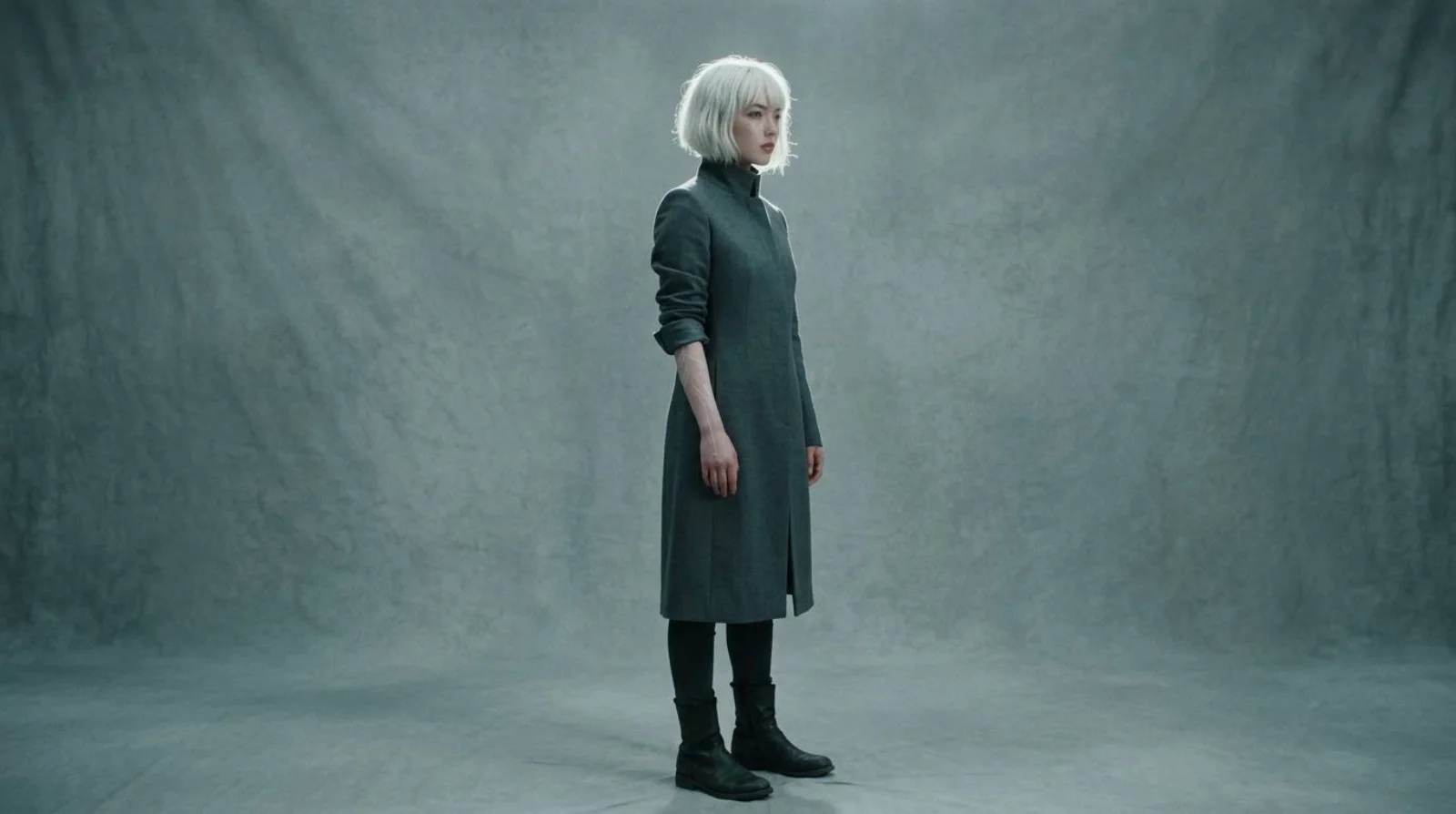
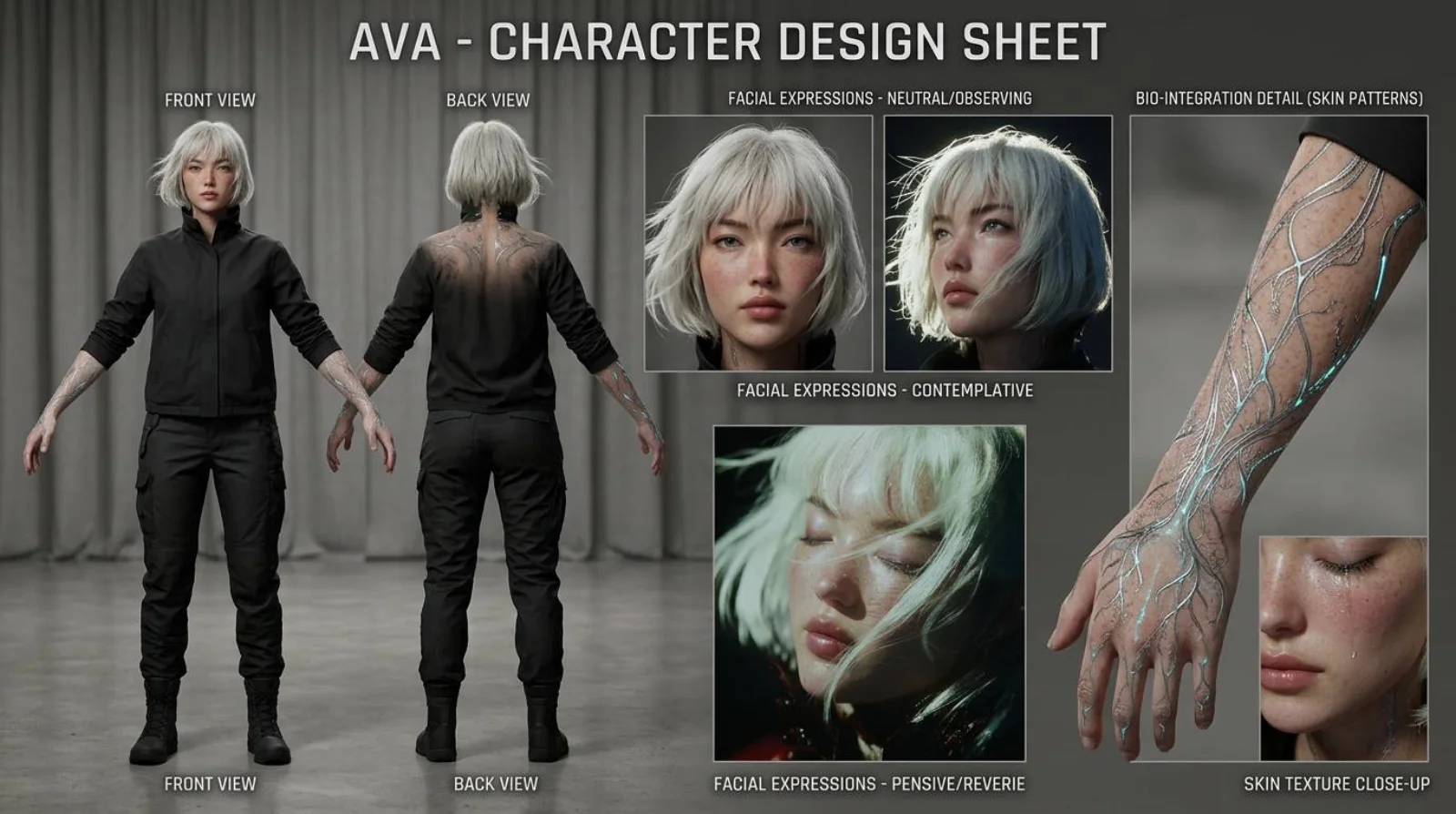
I still haven't mastered the art of character sheets. Other times, the stronger move was using an input image where the character was already staged in the shot. There was no perfect lock.
The character still drifted.
But the workflow got me close enough, fast enough, to keep moving.
That is the real shape of AI filmmaking right now. Not magic. Not one prompt. A chain of partial solutions that get you close enough to make the next decision. The same thing happened in the edit.
Before posting the film, I had run out of fast hours in Midjourney. Runway unlimited meant waiting almost an hour for two Seedance generations. So I was doing what everyone actually does when making these things: reviewing the edit, polishing, waiting, replacing, cutting, trying to make the piece feel intentional while the tools slowly returned material. That post is here.
This is the part people underestimate.
The model gives you material. The edit turns material into intention.
A moving shot is not automatically a scene. A scene is not automatically a story. A story is not automatically a world.
Every layer requires decisions.
What do you show? What do you hide? When do you cut? How long do you stay?
Does the motion reveal something, or is it moving because the model can move?
Does the sound create pressure, or is it just decoration?
Does the character feel like the same person across the sequence, or did the model slowly average them into someone else?
The better the tools get, the more visible these questions become. When the tool is bad, you can blame the tool.
When the tool is good, the quality of your decisions is exposed.
That is why I keep coming back to World Building.
World Building is not lore.
Lore is the cheap layer. Names, places, factions, dates, backstory. All useful, but not enough. A useful distraction, a dangerous rabbit hole.
World Building is continuity under pressure.
It is the ability to make a character, an environment, a shot, a costume, a voiceover, a cut, and a final image feel like they belong to the same underlying system.
That system can contain contrast. It should contain contrast.
A world where everything looks identical is dead. Different locations, different emotional registers, different textures, different types of beauty can all belong together if they feel authored.
The danger is not difference. The danger is accident.
A different art direction can expand the world. A random art direction breaks it.
That is what I was playing with in the ending shot.
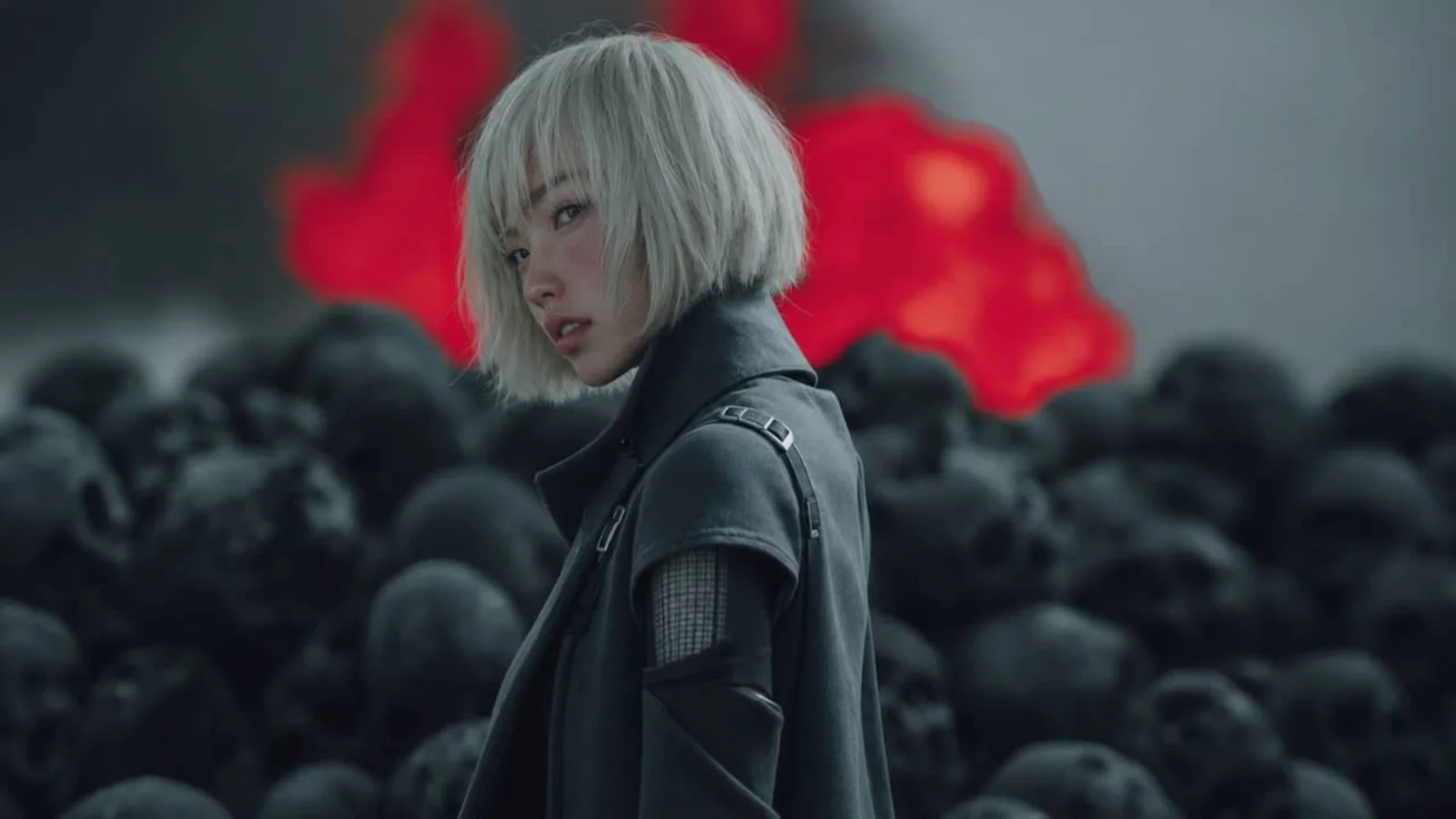
The viewer should leave with questions. That is the part I care about most. Not whether the image is beautiful, although that should be the baseline. Whether you want to know more. I also posted some behind-the-scenes excerpts here.
Some shots used Cinematique, my cinematic prompt/reference system, because I wanted controlled starting points instead of generic "AI film" texture. This is how I think about these tools now.
They are not replacement directors. They are control layers.
The model can generate the shot. The reference system can steer the shot. The character sheet can stabilize the face. The edit can create rhythm. The sound can add pressure.
*But someone still has to hold the vision tightly enough that the whole thing does not dissolve into a folder of impressive fragments. That is you now, if you want to survive. You need to become the Director, master curator, tastemaker.*
That is the actual work. And as the models get better, that work becomes more important, not less. Because when a tool can give everyone everything, the only thing left in evidence is the quality of the decisions.
Ivan — VVSVS™